 |
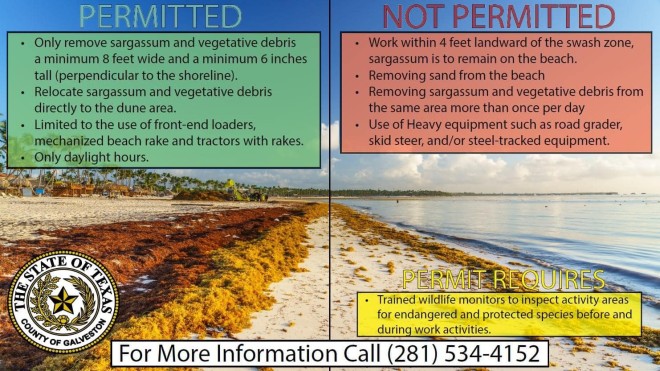
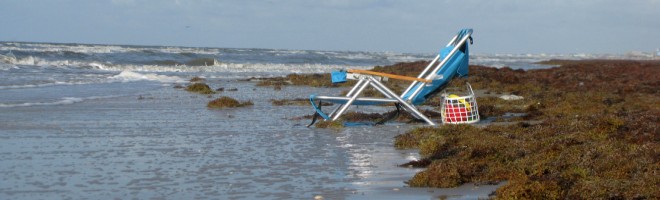 Found mostly in the Atlantic Ocean and greatly concentrated in the Sargasso Sea, Sargassum weed’s name is a result of Portuguese sailors likening this ocean-dwelling species’ bladder’s appearance to small grapes called salgazo. Sargassum weed gravitates toward milder, more temperate and tropical oceans and further, toward shallow bodies of water such as coral reefs. While some Sargassum weed attaches to the ocean floor, there are two species – the natan and the fluitan – that have become holopelagic, which means that they drift and migrate around the ocean and bodies of water throughout the world, though they are mostly concentrated in the Atlantic Ocean and surrounding bodies of water. The Benefits of Sargassum Weed The brown drift of floating seaweed that is Sargassum weed acts as a mobile transport habitat for a great variety of marine life and as sublime refuge for young fish that may lack mobility. When young fish find a safe haven in Sargassum weed, they are far more protected from the ocean’s predators, thus making it possible to survive to adulthood. These fronds provide shelter, food and a place where schools may form, further protecting young fish and other marine life. Many species of marine life take refuge in the Sargassum weed, and travel thousands of miles with this floating habitat, seeking protection and survival. With the presence of all of these young fish in one location in the Sargassum weed, large game often hovers around, awaiting its shot at the young prey. All of this serves as a great boon for anglers, letting the large game fish come to them. Once Sargassum weed has found its way to a shoreline, it can be culled and used as nutrient-rich fertilizer and compost for land-dwelling organisms, as well. 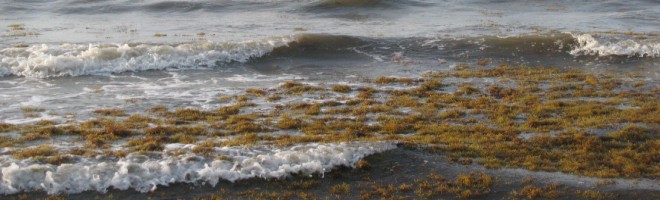 How Sargassum Weed Moves in the Gulf of Mexico Even with the vast concentration of Sargassum weed lying in the Sargasso Sea, bits and pieces do break off and drift with the currents. Each year, large chunks of this seaweed breaks away from its home base and makes its way toward the Caribbean Sea, spilling into the Yucatan Straits and is then pulled into a loop current stream in the southern Gulf of Mexico. Eventually, this offshoot drift of Sargassum weed finds its way to the northern Gulf of Mexico, with the assistance of the current. 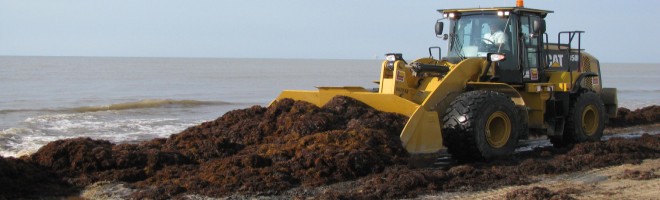 Why Sargassum Visits the Beaches of Texas Finding itself trapped in the currents of the Gulf Stream in the Gulf of Mexico, Sargassum weed naturally meanders its way – or more accurately is transported -- toward the beaches of Texas each year. This typically occurs in the spring and early summer months. During this time, huge deposits of Sargassum weed will wash up on the beaches. Heavy equipment is used to gather the weed from the shoreline and deposit it to help rebuild the sandy dunes. Marine Life that Lives in Sargassum Weed As the weed it approaches shore, it will disperse into smaller clumps. By wading into the shallow waters, you can scoop up a clump of weed and see very small shrimp and crabs clinging to the weed. Look carefully, the marine life is camouflaged very well. Occasionally, you will see a Sargassum Fish and perhaps, a seahorse. 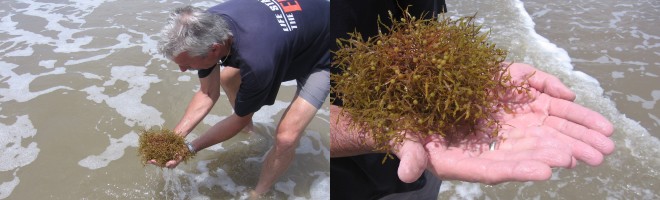 Small marine life can be found clinging to the Sargassum weed. Sargassum Birds Sargassum - Wikipedia 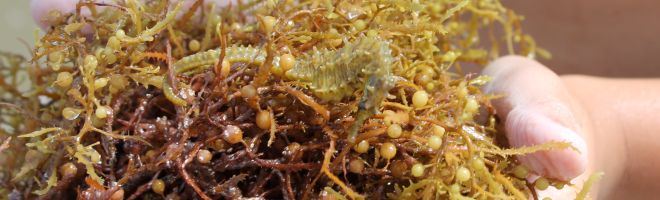 Grant Carnell discovered this seahorse, camouflaged in a clump of floating Sargassum weed. |
  |